
- What is a Dealer Management System?
- How does the Dealer Management System work?
- What are the benefits of a Dealer Management System?
- Which sectors are suitable for a Dealer Management System?
- What to Consider When Choosing a Dealer Management System?
- An Example from One Industry: From Email to Centralized Dealer Management
- Frequently Asked Questions
What is a Dealer Management System?
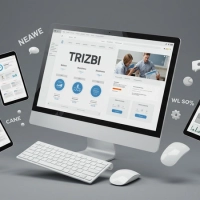
A dealer management system is software that enables a company to manage all its business relationships with dealers, distributors, or corporate clients through a single digital platform. It increases operational efficiency by centralizing critical processes such as order management, inventory tracking, performance analysis, invoicing/collection, and dealer communication.
How does the Dealer Management System work?
-
Each dealer is registered in the system; their price group and authorization level are determined.
-
Dealer orders are processed into the system, and stock levels are updated in real time.
-
Dealer-specific pricing and discount rules are defined using a flexible pricing engine.
-
Collections from dealers are processed into the current account; balance and due dates are automatically tracked.
-
Sales data is reported, and each dealer's performance is evaluated using KPIs.
-
The system integrates with existing ERP and CRM software, preventing data duplication.
What are the benefits of a Dealer Management System?
-
Effective inventory management: real-time inventory tracking allows both the central office and distributors to see inventory status instantly.
-
Fast and accurate orders: digital order management reduces entry errors and shortens processing time.
-
Dealer performance analysis: the effectiveness of each dealer is measured by evaluating sales data.
-
Strong central-dealer communication: centralized communication management facilitates campaign announcements and support requests.
-
Reduced manual errors: the risk of errors associated with taking orders via email/phone is eliminated.
-
Time and labor savings: repetitive tasks are automated, allowing teams to focus on strategic work.
Which sectors are suitable for a Dealer Management System?
The franchise model is one of the most effective distribution methods in many sectors; the franchise management system is widely used in the following sectors:
-
Automotive and spare parts
-
Construction and building materials
-
Food and beverage production (including cold chain monitoring)
-
Wholesale of electrical and electronics
-
Cleaning and cosmetic products
-
Agricultural, livestock and farming products
-
Packaging and industrial products
What to Consider When Choosing a Dealer Management System?
|
Criterion |
Why it matters |
|
Needs analysis |
A system should be selected that is appropriate to the company's number of dealers, sector, and process complexity. |
|
User experience |
A simple and user-friendly interface, both at the central office and retail levels, facilitates adoption. |
|
Flexible pricing/discount engine |
Dealer-specific pricing and discount policies should be easily definable. |
|
ERP, CRM and accounting integration |
Seamless integration with existing systems prevents data duplication and errors. |
|
Mobile compatibility and remote access |
The ability for dealers and field teams to access the system from anywhere provides operational flexibility. |
|
Technical support and updates |
Regular updates and accessible support ensure the system's sustainability. |

An Example from One Industry: From Email to Centralized Dealer Management
A construction materials wholesaler, which tracked dealer orders via email and phone, integrated its entire dealer network into a single panel after switching to a dealer management system; stock levels and dealer performance can now be monitored in real time, and pricing errors have been eliminated.
“We no longer search emails to find out which dealer placed what order; it’s all on a single screen,” says the company’s sales operations manager.
Trizbi is a B2B dealer management software that integrates with its own ERP infrastructure, managing dealers' order, inventory, accounts receivable, and collection processes on a single platform. With its flexible pricing engine and B2B dealer portal, dealers can place orders independently, while the central office monitors the entire process from a single panel.

Frequently Asked Questions
Which sectors are suitable for a dealer management system?
It can be used in almost every sector that operates with a dealer network, such as automotive, retail, food, technology, construction/building materials, industrial products, and agriculture.
Can the dealer management system be integrated with ERP or CRM systems?
Yes; Trizbi's dealer management system integrates with ERP, CRM, and accounting software, providing centralized management.
What is the difference between a dealer management system and a B2B dealer portal?
The dealer management system is the overall infrastructure where the central office manages the dealer network; the B2B dealer portal is a component of this infrastructure where dealers can place orders independently of their own accounts.
Is a dealer management system necessary for small dealer networks as well?
Yes; even with a small number of retailers, the errors and time wasted by taking orders via email/phone make digitalization worthwhile before the network grows.
Want to manage your dealer network from a single dashboard? Try Trizbi for free for 15 days without needing to provide your credit card information.
Related pages: Dealer Management · Order Management · B2B Dealer Portal