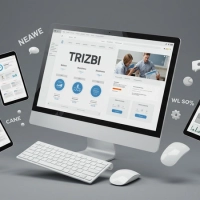

What is B2B Software?
B2B software is a system that brings together order, pricing, inventory, and collection processes between manufacturers and wholesalers and their dealers, distributors, and corporate customers on a single digital platform. In sectors operating with dealer networks, such as automotive spare parts, food/FMCG distribution, building materials, textile wholesale, and industrial products, it replaces order processes conducted via telephone and email. By integrating with ERP, CRM, and accounting software, it ensures that every order from the dealer side is instantly visible in the central system.
How to Install B2B Software?
-
Needs analysis and goal setting: order volume, number of dealers, and bottlenecks in the current process (such as ordering by phone, manual inventory tracking) are identified.
-
Selecting the right B2B software: candidates are compared based on industry suitability, integration capabilities, and pricing model.
-
ERP/CRM/accounting integration planning: clarifies how data flow will be established with existing software and how to prevent duplicate data entry.
-
Transfer of product, price, and dealer data: product catalog, dealer-specific price/discount rules, and current account information are entered into the system.
-
Testing and pilot use: order, inventory, and collection flows are pre-tested with a limited group of dealers.
-
Going live and team training: the entire dealer network is integrated into the system; sales and operations teams are trained on panel usage.
What Solutions Does B2B Software Offer?
-
Inventory and product management: Manual inventory counting via Excel and the resulting 'out of stock' errors are eliminated; every retailer sees the same real-time inventory data.
-
Order and dealer management: Dealers can place orders 24/7 from their own panel without having to wait for a sales representative to place orders by phone.
-
Website integration: B2B requests coming through the corporate website flow directly into the system without going through manual email traffic.
-
Accounting and finance integration: payments from dealers are reflected in the current account without having to be manually entered into accounting records.
-
CRM and customer relations: dealer contact history and requests remain centralized, even if the sales representative changes.
-
Integration with other systems: By connecting with ERP, shipping/logistics, and payment systems, the order-delivery-collection chain can be tracked from a single point.
-
Reporting and analytics: identifying which distributors are experiencing a drop in order frequency can be done before the end of the month.
-
Mobile access and security: field sales teams and dealers can access the system via mobile browser; data is stored in accordance with the Turkish Personal Data Protection Law (KVKK).
What to Consider When Choosing a B2B Program?
|
Criterion |
Why is it important? |
|
Needs analysis |
Without clearly defining the current order volume, number of dealers, and process bottlenecks, the selected software will not meet the needs. |
|
Industry suitability |
The software needs to be adaptable to the pricing and ordering logic of your retailer/wholesale model. |
|
User experience and mobile compatibility |
Whether dealers can easily place orders in the field will determine whether the system will actually be used. |
|
ERP/CRM/accounting integration |
The current systems should be able to work from a single record without data duplication. |
|
Flexible pricing and discount engine. |
Dealer-specific price tiers and campaign rules should be definable without needing to manually convert them to Excel. |
|
Security infrastructure |
Dealer and customer data must be stored and authorized in accordance with the Turkish Personal Data Protection Law (KVKK). |
|
Reporting and analytical depth |
Dealer performance should be measurable using KPIs such as sales volume and inventory turnover rate. |
|
Scalability |
The system should not experience a performance loss as the number of dealers increases. |
|
Trial version and migration support |
Testing with real data before going live reduces the risk. |
|
Quality of technical support and training. |
The quality of post-installation team training and support determines the actual adoption of the system. |
An Example from One Sector: From Telephone Ordering to Digital Dealer Networks
In a food distribution company that collected dealer orders via phone and WhatsApp, each order was manually entered into the system by a sales representative, a process that could take hours on some days. After switching to B2B software, dealers began entering orders directly from their own panels; the sales team was able to dedicate more time to visiting dealers and acquiring new ones instead of processing orders manually.
“Instead of processing orders one by one in our email inboxes every morning, we now look directly at the reports,” says the company’s sales operations manager.
Trizbi is a B2B dealer management software that integrates with its own ERP infrastructure and manages dealers' order, inventory, accounts receivable, and collection processes on a single platform. As your dealer network grows, it allows you to manage the entire process from order to collection from a single panel, eliminating reliance on phone and email.
Frequently Asked Questions
What is B2B software?
B2B software is a system that brings together order, pricing, inventory, and collection processes between manufacturers and wholesalers and their dealers, distributors, and corporate customers on a single digital platform.
Which businesses are suitable for B2B software?
This is suitable for almost any manufacturer, wholesaler, or corporate sales business that operates with a dealer or distributor network; as the number of dealers increases, so does the burden of telephone/email management.
Is the B2B software mobile-friendly?
Trizbi's B2B software operates via a mobile browser; dealers and field sales teams can access order and stock information even in the field.
What is the difference between B2B software and B2C software?
B2C software sells to individual end-users at standard prices; B2B software, on the other hand, manages dealer-specific pricing/discount levels, current accounts, and bulk order processes.
Is an ERP system also required for B2B software?
It's not mandatory; Trizbi integrates seamlessly with your own ERP infrastructure, but integration with existing ERP or accounting software is also possible.
Want to free your dealer network from dependence on phone and email? Try Trizbi's B2B software for 15 days free, without providing credit card information.
Related pages: What is a Dealer Management System? (Comprehensive Guide) · B2B Dealer Portal · Dealer Management